Willa Cather: Pulitzer Winner Who Authored 12 Novels and Challenged Gender Roles in 1890s America
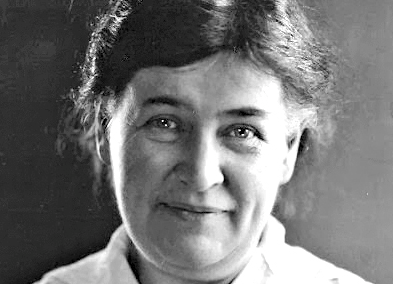
- Defied conventions by cross-dressing as a teen and pursuing journalism in male-dominated fields.
- Crafted iconic frontier tales like ‘My Ántonia,’ selling over 200,000 copies in initial runs.
- Shared a 39-year partnership with Edith Lewis amid early 20th-century societal taboos.
Despite instructions in her will to destroy all personal correspondence, over 3,000 of Willa Cather’s letters surfaced in archives by 2013, offering glimpses into the private world of an author who reshaped American literature through her unyielding independence.
Wilella Sibert Cather arrived on December 7, 1873, in the rural expanse of Back Creek Valley near Winchester, Virginia, the eldest child in a family that would grow to include six siblings: Roscoe, Douglass, Jessica, James, John, and Elsie.
Her father, Charles Fectigue Cather, traced his lineage to Welsh roots and managed a real estate and insurance business, while her mother, Mary Virginia Boak, a former schoolteacher, oversaw a household steeped in Southern traditions.
The family’s Greek Revival home, Willow Shade, sprawled across 130 acres, providing a sheltered upbringing amid post-Civil War Virginia.
Yet financial strains from the Panic of 1893 loomed, prompting thoughts of relocation.
What hidden family dynamics might have influenced young Willa’s early fascination with storytelling, especially as she bonded more closely with her brothers than her sisters?
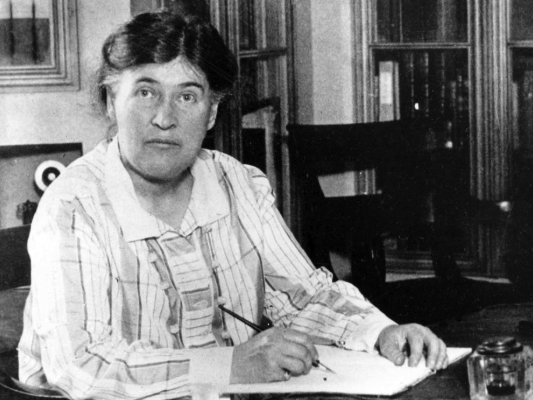
By 1883, at age nine, the Cathers uprooted to Webster County, Nebraska, joining Charles’s father in a bid to farm the unforgiving Great Plains and evade Virginia’s tuberculosis epidemics that claimed thousands annually in the late 19th century.
After 18 months of homestead struggles, they settled in Red Cloud, a town of about 2,500 where Charles opened a loan office.
Here, Willa encountered a mosaic of immigrant communities—Bohemian, Swedish, German, and Norwegian settlers who comprised over 40 percent of Nebraska’s population by 1890.
She roamed the prairies, absorbing their languages and hardships, even accompanying local physician William McKee on house calls, igniting a brief aspiration toward surgery.
In Red Cloud High School, graduating in 1890 at 16, she honed her voice through debates and early publications in the Red Cloud Chief newspaper.
But what compelled her, during these formative years, to adopt masculine attire and sign her name as “William Cather, M.D.,” a choice that scandalized locals and foreshadowed her lifelong resistance to gender constraints?
Enrolling at the University of Nebraska-Lincoln in 1891, Willa pursued a Bachelor of Arts in English, completing it in 1895 amid a student body of roughly 1,500.
She edited the campus literary magazine The Hesperian, contributed drama criticism to the Nebraska State Journal—earning $1 per column—and studied under future military leader John J. Pershing in mathematics.
An early essay on Thomas Carlyle, published unexpectedly in a local paper, shifted her from science to literature.
During this period, she continued her cross-dressing, arriving in tailored suits and short hair, signing works as “William Cather, Jr.,” which drew whispers but also admiration for her intellectual prowess.
How did these bold expressions influence her later portrayals of resilient female characters who defied societal molds?
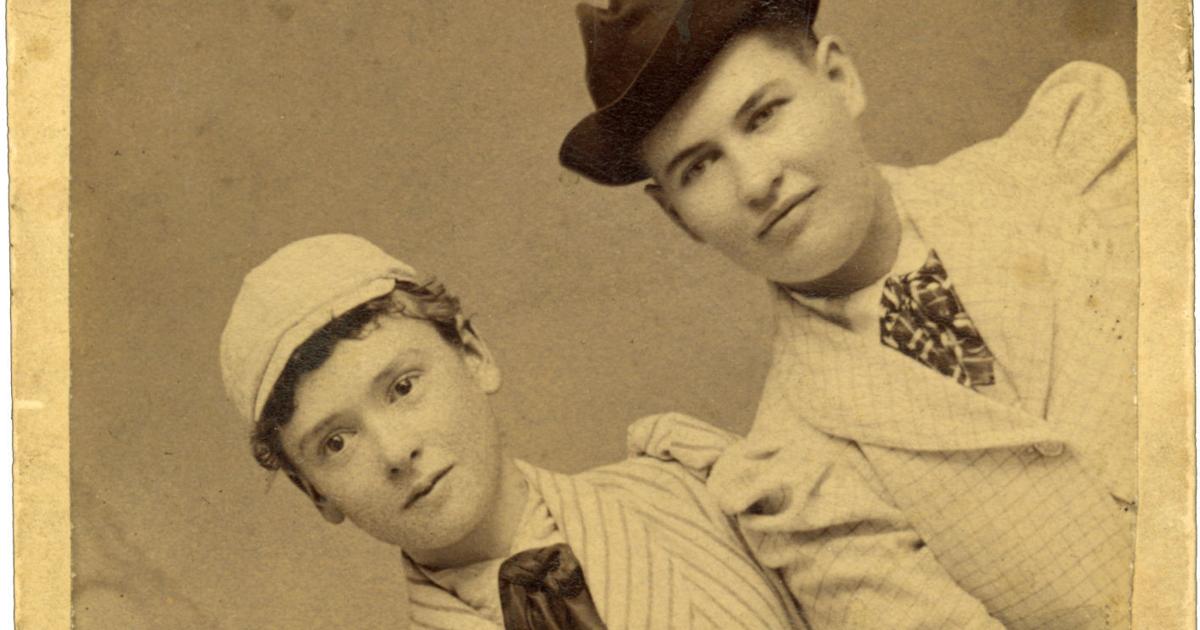
Post-graduation in 1896, Willa ventured to Pittsburgh, Pennsylvania, securing a position at Home Monthly magazine, where she wrote fiction, poetry, and edited content for a circulation of 20,000 readers.
When the publication sold in 1897, she transitioned to telegraph editor and drama critic at the Pittsburgh Leader, supplementing income by teaching Latin and English at Central High School for a year, then heading the English department at Allegheny High School until 1903.
Her stories, such as “Tommy, the Unsentimental” in 1896, challenged gender stereotypes, portraying a young woman thriving in a man’s world.
A 1902 trip to Europe with friend Isabelle McClung exposed her to cultural influences from France and England, inspiring her debut poetry collection, April Twilights, published in 1903 with 500 copies printed.
What unpublished drafts from this era might reveal about her evolving critique of urban industrialization versus rural authenticity?
By 1906, Willa relocated to New York City, joining McClure’s Magazine as an editor, where she ghostwrote exposés on Christian Science founder Mary Baker Eddy, contributing to 12 of 14 articles in a series that sold over 100,000 copies.
This role honed her narrative skills, leading to her first novel, Alexander’s Bridge, serialized in 1912.
Around 1908, she met Edith Lewis, a Nebraska-born editor born December 22, 1881, who had graduated from Smith College and worked at McClure’s.
Their bond deepened; by 1912, they shared apartments in Greenwich Village, including a Bank Street residence from 1913 to 1927, and summered at a rustic cottage on Grand Manan Island in New Brunswick, Canada, purchased in 1926 without modern amenities like electricity.
Lewis, who outlived Willa by 25 years until 1972, served as her literary executor and provided editorial input on manuscripts.
In an age when same-sex relationships faced legal perils—sodomy laws in New York carried up to 20 years imprisonment—how did they navigate discretion while maintaining a household that hosted literary figures like Sinclair Lewis?
Willa’s breakthrough came with O Pioneers! in 1913, drawing from Nebraska’s immigrant farmers and selling modestly at first but gaining acclaim for its portrayal of Alexandra Bergson, who transforms barren land into prosperity amid personal sacrifices.
The novel, part of her “Prairie Trilogy,” reflected the real-life Annie Pavelka, a Bohemian settler Willa knew in Red Cloud.
Following in 1915 was The Song of the Lark, inspired by opera singer Olive Fremstad and exploring a artist’s ascent from Colorado poverty to fame, with themes of ambition that mirrored Willa’s own trajectory.
My Ántonia in 1918, dedicated to her nieces, chronicled Bohemian immigrant Ántonia Shimerda’s endurance through suicide, labor, and motherhood, earning praise from H.L. Mencken and selling over 10,000 copies in its first year despite wartime paper shortages.
What personal losses, like the 1918 influenza pandemic that killed millions, infused her depictions of grief in these works?
Shifting publishers to Alfred A. Knopf in 1920 for better promotion, Willa released One of Ours in 1922, a World War I narrative based on her cousin’s letters, which won the Pulitzer Prize for the Novel in 1923—the award’s second year, with a $1,000 prize—and sold 15,000 copies initially.
Critics like Edmund Wilson lauded it, though some decried its romanticism. A Lost Lady followed in 1923, adapted into films in 1924 and 1934, portraying a woman’s decline in a changing West.
The Professor’s House in 1925 delved into academic disillusionment, incorporating Mesa Verde archaeology after Willa’s 1915 Southwest trip.
My Mortal Enemy in 1926 examined marital strife, while Death Comes for the Archbishop in 1927, set in 19th-century New Mexico, became a bestseller with 86,500 copies sold in two years, praised for its episodic structure akin to frescoes.
How did her Catholic influences, despite not converting, shape this tale of missionaries?
Shadows on the Rock in 1931, set in 17th-century Quebec, topped U.S. sales charts that year, reflecting her fascination with French-Canadian history from a 1928 trip.
Obscure Destinies in 1932 compiled stories like “Neighbour Rosicky,” drawing from immigrant neighbors.
Lucy Gayheart in 1935, a musician’s story, achieved bestseller status, while Sapphira and the Slave Girl in 1940, her only Virginia-set novel, sold over 200,000 copies via Book of the Month Club and explored slavery’s legacies.
Throughout, Willa produced over 60 short stories, two poetry volumes, and essay collections like Not Under Forty in 1936, critiquing modern literature.
Elected to the American Academy of Arts and Letters in 1929 and receiving its gold medal in 1944, she amassed honors amid a catalog of 12 novels that influenced writers like Wallace Stegner.
But what conservative views, expressed in letters opposing the New Deal, alienated her from Depression-era critics?
Later years brought personal trials: brother Douglass’s death in 1938 from a heart attack, Isabelle McClung’s passing that year, and a 1940 wrist injury from tendonitis that hampered writing.
World War II curtailed travels, ending Grand Manan visits after 1940.
Diagnosed with breast cancer in December 1945, she underwent a mastectomy in January 1946, but the disease metastasized to her liver.
On April 24, 1947, at 73, she succumbed to a cerebral hemorrhage in her Park Avenue apartment, with Edith by her side.
Buried in Jaffrey, New Hampshire—a site she cherished from earlier vacations—her gravestone bears a quote from My Ántonia: “…that is happiness; to be dissolved into something complete and great.”
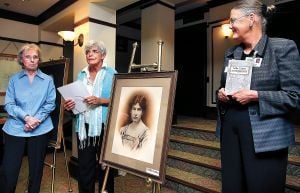
Her 1943 will forbade adaptations of her works and letter publications, though dramatizations were later allowed, and Selected Letters appeared in 2013 with 566 entries.
What revelations in those documents about her relationships and creative process continue to intrigue scholars?
Willa’s legacy spans inductions into the National Women’s Hall of Fame in 1988, a 1973 U.S. postage stamp, and a 2023 bronze statue in the U.S. Capitol’s National Statuary Hall, replacing Julius Sterling Morton.
The Willa Cather Foundation, established in 1955, manages her Red Cloud childhood home, visited by 5,000 annually, and oversees scholarly editions of her works, with 13 of 15 volumes published by 2020.
Her influence on American literature persists through themes of exile, ecology, and individualism, impacting over 100 academic theses yearly and inspiring adaptations like the 1995 TV film of O Pioneers! starring Jessica Lange.
Yet, as archives digitize more of her 1893-1902 journalism from The World and the Parish, one wonders what forgotten critiques of imperialism or gender might emerge to redefine her role in LGBTQ history and women’s rights movements.