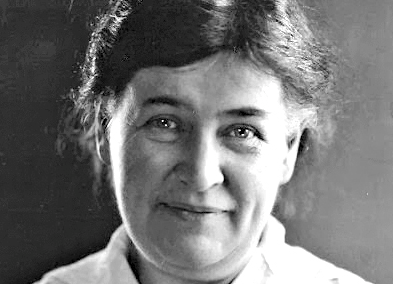
Elizabeth Peratrovich: Tlingit Pioneer Behind 1945 US First Anti-Discrimination Law Victory
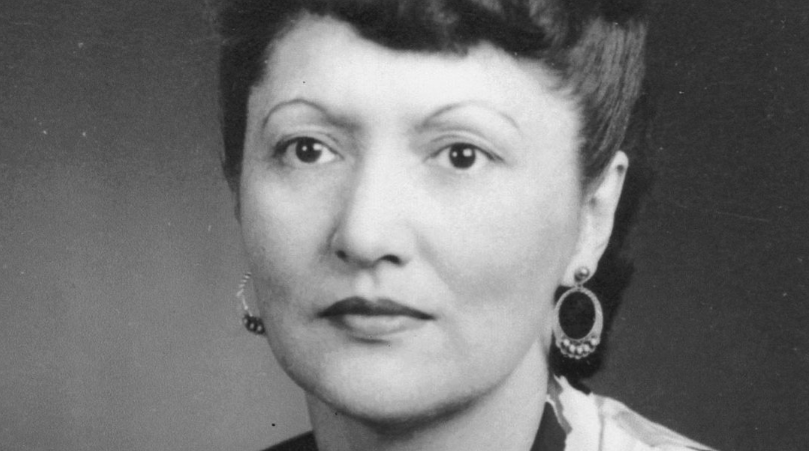
- Led passage of Alaska’s groundbreaking 1945 Anti-Discrimination Act.
- Delivered iconic speech countering racial slurs in territorial legislature.
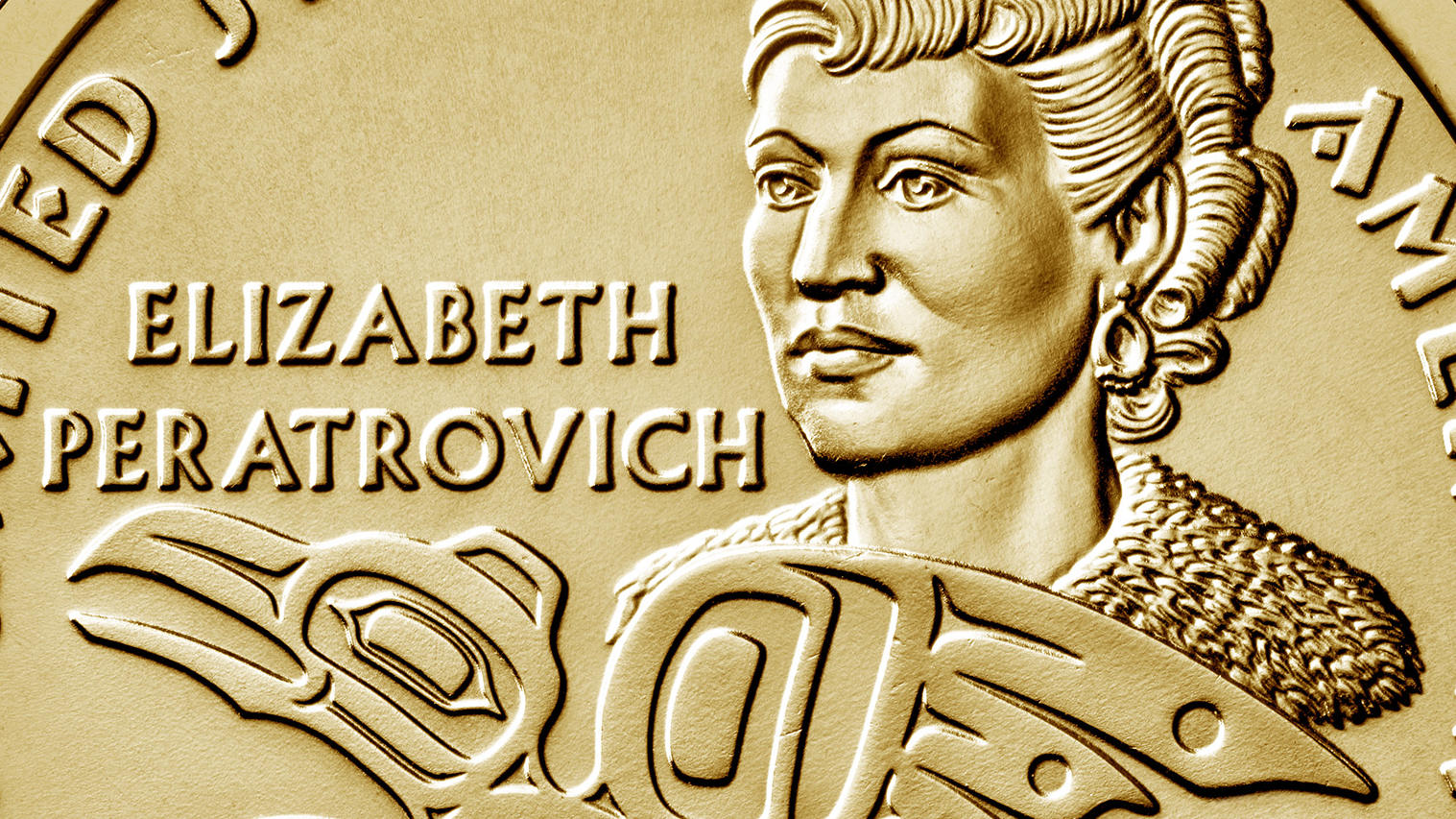
- Honored on 2020 US $1 coin and annual February 16 state holiday.
Nearly two decades before the 1964 Civil Rights Act transformed the nation, a Tlingit woman in Alaska orchestrated the passage of America’s inaugural anti-discrimination legislation, challenging entrenched racial barriers in a territory where Native people faced daily exclusion from public life.
Elizabeth Jean Wanamaker entered the world on July 4, 1911, amid the rugged coastal landscapes of Petersburg, Alaska, then part of the District of Alaska under U.S. administration.
As a member of the Lukaax̱.ádi clan within the Raven moiety of the Tlingit Nation, she carried the traditional name Ḵaax̲gal.aat, translating to “person who packs for themselves,” a moniker that foreshadowed her self-reliant spirit in civil rights activism.
Orphaned at a tender age, she found stability through adoption by Andrew Wanamaker, a fisherman and dedicated Presbyterian lay minister, and his wife Jean.
This couple nurtured her in a series of small Alaskan communities—Petersburg, Klawock, and Ketchikan—where the harsh realities of frontier life intertwined with the rich cultural heritage of Indigenous peoples.
In these settings, young Elizabeth absorbed the values of community resilience and moral fortitude, elements that would later fuel her fight against Native American discrimination.
Her educational path reflected a determination uncommon for Native women of the era, when access to schooling remained limited for Indigenous youth.
She completed her secondary studies at Ketchikan High School, where she excelled despite systemic barriers that often relegated Native students to vocational tracks rather than academic pursuits.
Pursuing higher learning, Elizabeth attended Sheldon Jackson College in Sitka, a Presbyterian institution founded in 1878 that served many Alaska Native students, offering courses in liberal arts and teacher training.
She furthered her studies at the Western College of Education in Bellingham, Washington—now integrated into Western Washington University—gaining credentials that equipped her for leadership roles beyond the classroom.
By the early 1930s, with a solid foundation in education, she returned to Alaska, ready to navigate a society rife with racial segregation.
On December 15, 1931, Elizabeth married Roy Scott Peratrovich, a fellow Tlingit of mixed Native and Serbian heritage who labored in the region’s bustling canneries.
Their union blended personal commitment with shared cultural pride, as Roy’s background included descent from the Kaagwaantaan clan.
The couple settled initially in Klawock, a small Prince of Wales Island village where Roy ascended to the role of mayor, serving four consecutive terms from the mid-1930s onward.
During this period, they welcomed three children: Roy Jr. in 1934, Frank in 1938, and Loretta in 1942.
As a devout member of the Presbyterian Church, Elizabeth balanced family life with community involvement, fostering an environment where her children could embrace both Tlingit traditions and modern opportunities.
The Peratrovich family’s relocation to Juneau in 1941 marked a pivotal shift, exposing them directly to the pervasive anti-Native sentiment that permeated Alaskan society.
As one of the first Indigenous families to integrate a predominantly non-Native neighborhood, they encountered overt hostility, including restrictive covenants and public signs proclaiming “No Natives Allowed” or “We Cater to White Trade Only.”
Roy Jr., at just seven years old, became one of the inaugural Native children to enroll in Juneau’s public schools, a milestone that highlighted the era’s educational inequalities—statistics from the 1940s indicate that only about 20 percent of Alaska Native children attended integrated schools, with many confined to federal boarding institutions far from home.
These experiences ignited Elizabeth’s activism, transforming personal indignities into a broader crusade for Indigenous rights.
Joining the Alaska Native Sisterhood (ANS) in the late 1930s, Elizabeth rose swiftly through its ranks, leveraging the organization founded in 1915 to advocate for Native women’s issues.
By 1941, as Grand President of the ANS, she collaborated closely with her husband, who held the presidency of the Alaska Native Brotherhood (ANB), a companion group established in 1912.
Together, they represented over 10,000 members across Alaska, focusing on voter registration drives that boosted Native participation from negligible levels in the 1920s to over 5,000 registered voters by 1944.
Their partnership extended to direct action; in December 1941, after spotting a “No Natives Allowed” sign at a Juneau hotel, they penned a pointed letter to Territorial Governor Ernest Gruening, urging intervention against such practices that echoed Jim Crow laws in the Lower 48 states.
This advocacy culminated in legislative efforts.
In 1943, the Peratroviches supported House Bill 140, an initial anti-discrimination measure that passed the House but stalled in the Senate with an 8-8 tie, reflecting deep-seated opposition from business interests fearing economic backlash.
Undeterred, they mobilized grassroots support, hosting informal gatherings where legislators sipped coffee funded by community donations—efforts that raised awareness and shifted public opinion, with polls by 1944 showing 60 percent of Alaskans favoring equal rights for Natives.
The turning point arrived in 1945 with House Bill 14, introduced to prohibit racial discrimination in public accommodations.
On February 8, 1945, in the smoke-filled chambers of the Alaska Territorial Legislature in Juneau, the debate over the bill unfolded amid tense anticipation.
Native observers, including Tlingit, Haida, and Tsimshian representatives who had braved winter travels covering hundreds of miles, filled the gallery.
Legislators opposed the measure with arguments rooted in segregationist ideology, claiming Native integration would incite violence or that Indigenous people lacked readiness for equality.
One senator demeaned Native hygiene, while another, Allen Shattuck, escalated the rhetoric by questioning, “Who are these people, barely out of savagery, who want to associate with us whites, with 5,000 years of recorded civilization behind us?”
Seated quietly in the back, knitting as a symbol of composed restraint, Elizabeth set aside her needles and approached the podium as the final speaker.
At 33, with three young children at home, she delivered a measured yet piercing response: “I would not have expected that I, who am barely out of savagery, would have to remind gentlemen with five thousand years of recorded civilization behind them, of our Bill of Rights.”
She dissected discrimination’s forms—the politician indifferent to Native plight, the businessman prioritizing profit, the bigot clinging to superiority—and countered skepticism about laws changing hearts by comparing them to statutes against theft and murder, which affirm societal values even if they do not eradicate evil.
Her testimony, lasting under 10 minutes, swayed the Senate to an 11-5 vote in favor, propelling the bill forward.
Governor Gruening signed the Anti-Discrimination Act into law on February 16, 1945, imposing fines up to $250 or 30 days imprisonment for violations, and mandating equal access to restaurants, hotels, and theaters—a precedent-setting measure that predated similar laws in states like New Mexico by a decade.

This victory dismantled over 200 documented “No Natives” signs across Alaska within months, fostering economic inclusion for Native communities that had endured exclusion rates as high as 80 percent in urban public spaces.
Post-1945, Elizabeth’s activism expanded beyond civil rights.
The family ventured internationally in 1947 when Roy received a United Nations fellowship—the first awarded to an Alaskan—to study fisheries at St. Francis Xavier University in Antigonish, Nova Scotia.
They later relocated to Denver, Colorado, where Roy pursued banking and finance at the University of Denver, enhancing his expertise in economic development for Native enterprises.
By the 1950s, a federal position drew them to Oklahoma, but Elizabeth’s declining health prompted a return to Alaska.
Throughout, she championed land claims, pushing for the recognition of over 44 million acres eventually secured under the 1971 Alaska Native Claims Settlement Act, which distributed $962.5 million and title to Indigenous corporations.
Tragically, breast cancer claimed her life on December 1, 1958, at age 47 in Seattle, Washington.
Buried at Evergreen Cemetery in Juneau beside Roy, who passed in 1989, she left a family legacy of achievement.
Roy Jr. emerged as a prominent civil engineer, co-founding Peratrovich, Nottingham and Drage, and designing infrastructure like the Brotherhood Bridge over the Mendenhall River, while also creating Native art installations viewed by thousands annually.
Frank served as Area Tribal Operations Officer for the Bureau of Indian Affairs in Juneau, overseeing programs aiding over 200 tribes.
Loretta carried forward the advocacy torch through community leadership.
Elizabeth’s influence endures in tangible tributes. In 1988, Governor Steve Cowper proclaimed February 16 as Elizabeth Peratrovich Day, a state holiday closing schools and offices, observed by over 730,000 Alaskans each year.
The ANS instituted an award in her name, recognizing Indigenous leaders who have impacted over 500 recipients since its inception.
By 1992, the Alaska State Capitol renamed Gallery B of the House chamber the Peratrovich Gallery, the sole such honor for a non-legislator.
In 2003, Anchorage dedicated Elizabeth and Roy Peratrovich Park, a downtown green space hosting annual events attended by 10,000 visitors, featuring a bronze sculpture depicting her historic stand.

Cultural acknowledgments proliferated in the 21st century.
The 2009 documentary “For the Rights of All: Ending Jim Crow in Alaska” premiered to audiences exceeding 100,000 via PBS broadcasts, chronicling her role with archival footage.
In 2017, Ketchikan’s Southeast Alaska Discovery Center named its theater after her, unveiling an exhibit seen by 150,000 tourists yearly.
National recognition followed: selected as a 2018 Women’s History Month honoree by the National Women’s History Project, and featured in The New York Times’ 2019 “Overlooked No More” series, which has spotlighted over 200 forgotten figures.
The United States Mint’s 2020 Native American $1 coin bore her likeness, the first for an Alaska Native, with over 1.5 million coins minted and circulated.
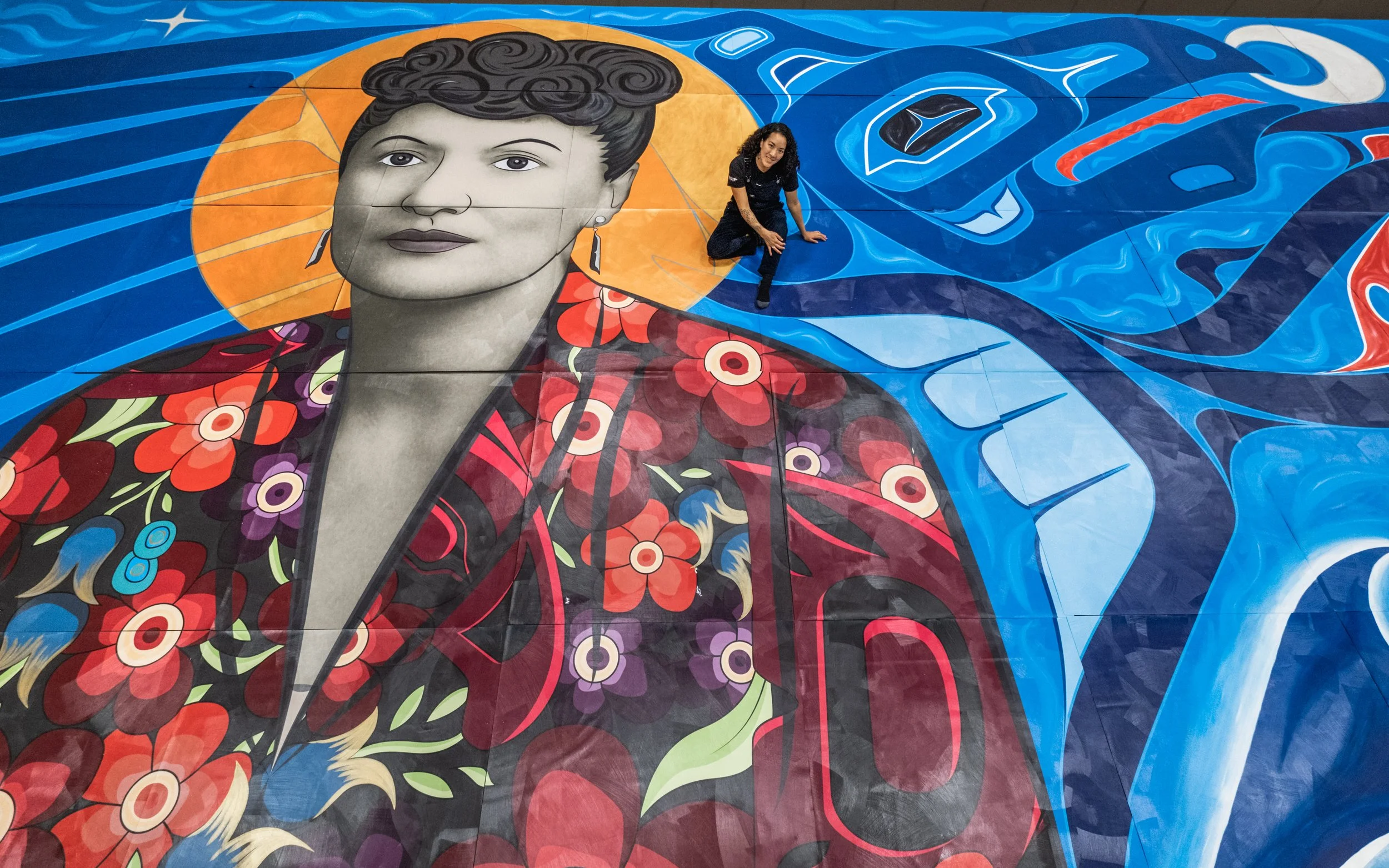
A December 30, 2020, Google Doodle, illustrated by Tlingit artist Michaela Goade, reached 500 million users in the U.S. and Canada, commemorating her 1941 petition.
Murals in Petersburg (2020) and Juneau (2021), along with a 2021 “Molly of Denali” PBS Kids episode viewed by 2 million children, perpetuate her story.
The Peratrovich family papers, archived at the Smithsonian National Museum of the American Indian, contain over 500 documents detailing her correspondence and clippings, offering scholars insights into mid-20th-century Indigenous advocacy.
In 2023, the U.S. Senate passed Resolution 561 designating a national Elizabeth Peratrovich Day, potentially expanding observance to all 50 states.
Yet, as her legacy inspires ongoing fights for Native voting rights—where suppression affects 1.5 million Indigenous voters nationwide—one ponders what undiscovered letters or testimonies might still reveal about her strategic mind, and how her quiet defiance continues to challenge modern inequities in ways we have yet to fully uncover.