Anna Essinger: The Educator Who Smuggled 66 Children from Nazi Germany and Saved 900 Lives
- Defied Nazi flag mandate with a clever school hike in 1933.
- Evacuated entire Herrlingen boarding school to England secretly.
- Aided 10,000 Kindertransport refugees and Holocaust survivors.
Over 900 children escaped the horrors of Nazi persecution through the efforts of one determined educator, a figure who orchestrated a daring school relocation before the full extent of the Holocaust unfolded.
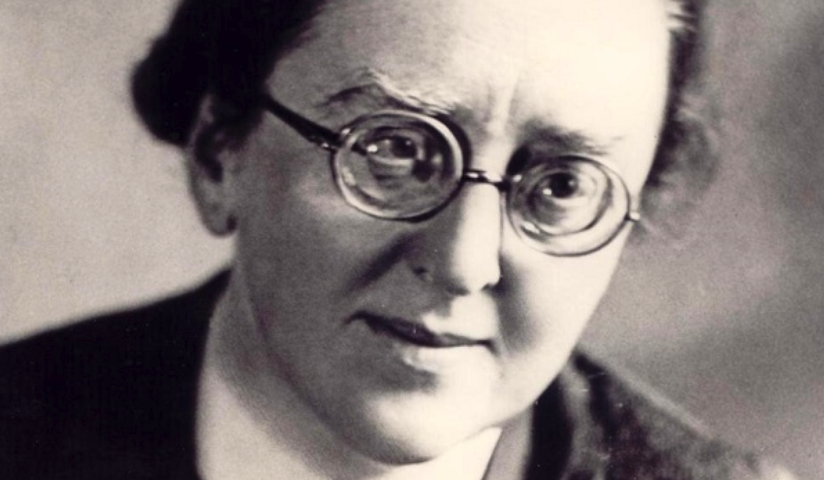
Born on September 15, 1879, in the bustling town of Ulm, Germany, Anna Christine Essinger entered the world as the eldest of nine siblings in a secular Jewish family.
Her father, Leopold Essinger, ran a successful insurance business, while her mother, Fanny Oppenheimer, managed the household.
The family roots traced back to her grandfather, David Essinger, a respected physician who had practiced medicine in the region since 1817.
From an early age, Anna displayed a fierce independence that set her apart in a society where women’s opportunities remained limited.
At just 20 years old in 1899, she ventured alone to the United States, a bold move for a young German woman at the turn of the century.
She settled initially with an aunt in Nashville, Tennessee, where she first encountered the Quaker community.
Their principles of equality, compassion, and moral steadfastness resonated deeply with her, shaping her worldview far more than any religious doctrine ever would.
In America, Anna pursued higher education with determination. She studied German literature and financed her studies by teaching the language privately.
She also established a student hostel, demonstrating an early knack for organization and community building.
By 1910, she had earned a Master’s degree in education from the University of Wisconsin in Madison, where she later lectured on pedagogical methods.
These years abroad exposed her to progressive educational ideas, including those inspired by Maria Montessori, which emphasized child-centered learning and practical skills.
Yet the pull of her homeland drew her back. In 1919, following the devastation of World War I, Anna returned to Germany as part of a Quaker relief mission.
Her role involved setting up soup kitchens and distributing food and clothing to starving children across war-torn regions.
She convinced local officials, from mayors to school principals, to support these efforts, feeding thousands in the process and witnessing firsthand the vulnerabilities of youth in crisis.
This experience fueled her commitment to child welfare. Back in Germany, Anna collaborated with her sisters to transform family initiatives into formal education.
Her sister Klara had founded an orphanage in Herrlingen in 1912, using her dowry to care for troubled, mentally unstable, and disabled children.
By 1925, as these wards reached school age, the siblings expanded it into a full boarding institution.
On May 1, 1926, Landschulheim Herrlingen opened its doors with 18 students aged six to 12. As headmistress, Anna implemented a coeducational, non-denominational model rooted in trust and mutual respect.
Teachers went by first names, corporal punishment was absent, and students learned through observation, questioning, and kindness.
The curriculum blended academics with practical tasks like gardening and carpentry, fostering self-reliance.
A 1927 inspection by the Ministry of Science, Art, and Education praised her as “extremely competent,” noting the “skillful, fresh, and stimulating” teaching environment.
Students and staff affectionately called her “Tante Anna” or “TA,” reflecting the familial atmosphere she cultivated.
By the early 1930s, Herrlingen stood as a beacon of progressive Jewish education amid growing unrest.
The school grew to accommodate around 66 pupils, many from Jewish families seeking an alternative to state institutions increasingly tainted by antisemitism.
Then, in January 1933, Adolf Hitler ascended to chancellor, and the Nazi regime swiftly imposed its ideology.
The Enabling Act of March that year granted dictatorial powers, accelerating persecution.
Public buildings, including schools, received orders to hoist the swastika flag in April.
Anna faced this directive with quiet defiance. She organized a three-day hiking excursion for her students, ensuring the school stood empty during the mandated display.
Upon return, she remarked that atop a vacant building, the symbol could neither convey its message nor inflict harm. This act marked the spark of her resistance.
Having read Mein Kampf years earlier, Anna anticipated the regime’s trajectory toward terror.
Jewish children in public schools endured humiliation, segregated lunches, and propaganda labeling them as “unclean.”
Educators like Kurt Hahn faced arrest, and book burnings in city squares consumed works by Einstein, Freud, and Marx.
Internally, betrayal struck when Helman Speer, spouse of a teacher, denounced her “humanistic” approach as unfit, urging Nazi oversight.
Undeterred, Anna scouted relocation options secretly. She explored Switzerland and the Netherlands before securing Quaker support in England.
A rundown manor house in Otterden, Kent—dating back to 1547 and linked to Henry VIII—became available for rent. Though dilapidated, it promised safety.
The evacuation demanded utmost secrecy, as mass Jewish emigration was illegal and could lead to arrests or school seizure.
Over summer 1933, Anna met parents in clandestine gatherings across Germany, earning their trust to relocate their children.
Staff subtly taught English and British customs under the guise of routine lessons. On October 5, 1933, the operation unfolded.
Three teacher-led groups dispersed: one along the Rhine from Basel, another through Munich, Stuttgart, and Mannheim, and a third via northern routes.
Parents delivered children to designated stations with instructions to suppress emotions, avoiding suspicion from uniformed guards.
At borders, tense inspections passed without incident. Sixty-five children, plus teachers, crossed into safety, reuniting in Ostend, Belgium, before ferrying to England.
The next day, classes resumed at what Anna initially named New Herrlingen School, soon rechristened Bunce Court.
Arrival brought challenges. The manor lacked basics—electricity, plumbing, even proper beds.
With limited funds, staff and older pupils renovated: installing wiring, converting barns to dorms, and planting gardens for self-sufficiency.
British inspectors initially criticized the setup but marveled at the community’s efficiency, crediting the dedicated educators.
Enrollment hovered between 64 and 140, with classes of five to eight students.
The curriculum mirrored Herrlingen’s progressive ethos: no formal grades, emphasis on individual progress, bilingual meals (English and French tables), daily physical exercises, and arts integration like drama and music. Chores built responsibility, from animal care (chickens, pigs, bees) to cleaning.

As Nazi aggression escalated, Bunce Court evolved into a haven for WWII child refugees.
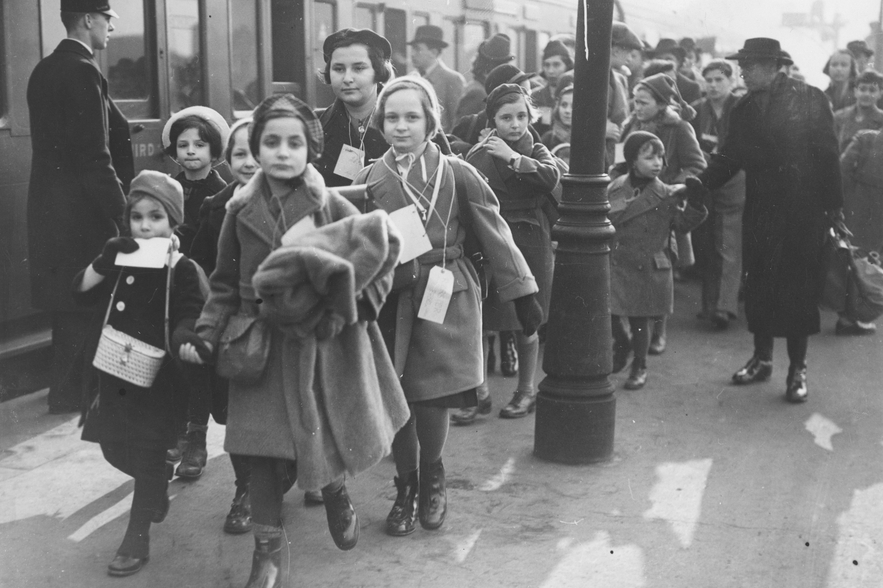
Kristallnacht on November 9-10, 1938, shattered illusions, prompting Britain’s Kindertransport program to accept 10,000 unaccompanied minors.
At nearly 60, Anna organized a reception center in Dovercourt, processing arrivals with a small team.
She secured foster placements, though she decried the selection as a “cattle market” where prettier children went first, eroding others’ spirits.
She incorporated at least 50 into Bunce Court pre-war, expanding to include youths from Austria, Czechoslovakia, Poland, and Hungary.
War’s outbreak in 1939 classified many staff and older pupils as “enemy aliens” under Defence Regulation 18b, leading to interments.
Five men and 10 boys were detained initially, later released as anti-Nazi refugees.
In June 1940, with 140 students, proximity to the Battle of Britain forced evacuation to Trench Hall in Shropshire.
The hurried move amid blackouts and overcrowding tested resilience; stables became dorms, and local hostility—slurs like “dirty Jerries”—prompted restricted outings.
Self-sufficiency intensified, with gardens yielding sustenance during rationing.
Despite hardships, Bunce Court attracted exceptional talent. Refugee professionals, barred from other work, joined: an astronomer taught math, a Berlin theater director led plays, a collaborator of Ludwig Koch instructed singing.
Students explored Latin, literature, Jewish philosophy (Maimonides, Spinoza), and practical trades.
Community events—concerts for villagers, sports, host family stays—integrated them into British life.
For many, the school erased traumatic memories; immunologist Leslie Brent later called his German past “like a bad dream.”
Post-1941, as Jewish emigration halted, enrollment dipped. Yet Anna persisted.
The school returned to Kent in 1946, post-military requisition, requiring further restoration. Then came the most shattered arrivals: Holocaust survivors from concentration camps.
In August 1945, 11 boys, including 14-year-old Sidney Finkel from Poland—who endured the Piotrków ghetto, Buchenwald, and Theresienstadt—joined.
Traumatized, they struggled with speech, sleep, and trust. Anna’s staff offered gentle patience, nutritious meals, and emotional space.
Finkel later reflected that Bunce Court “turned me back into a human being.” Similar stories emerged: Sam Oliner, from a displaced persons camp, learned cooperation through animal care, founding the Altruistic Behavior Institute later in life.
By 1948, with Anna’s eyesight failing—she was nearly blind—the school faced insurmountable challenges: staff shortages, low wages (£9 monthly stipend), and remote isolation.
On July 27, 1948, Bunce Court closed after 22 years, having sheltered over 900 children.
Anna retired to a modest hut on the grounds, maintaining lifelong bonds with alumni through letters and visits.
These former students scattered globally, achieving renown: painter Frank Auerbach, humorist Gerard Hoffnung, playwright Frank Marcus, filmmaker Peter Morley, economist Thomas Mayer, and foreign policy advisor Helmut Sonnenfeldt.
Richard Sonnenfeldt served as a Nuremberg interpreter. In Israel, Werner Loval built a real estate empire; in Germany, Michael Trede became a professor.
Her legacy endured beyond closure. Alumni reunions spanned 55 years. For her 80th birthday in 1959, they planted a grove in Israel bearing her name.
Ulm honored her with a commemorative plaque and named two schools after her: a Realschule in 1990 and a Gymnasium in Kuhberg.
Her papers, archived at the Ida Seele Archive in Dillingen an der Donau, aid research in education and social pedagogy.
In 2004, Ulm marked its 1,150th anniversary alongside her birthday, drawing family and students from the UK, Israel, and Germany for events.
The original school bell, salvaged by pupil Ernst Weinberg and shipped to California, returned in 2007 for reinstallation.
Even in 2004, the Oxford Dictionary of National Biography included her, despite her late naturalization as British.
What drove this woman, who started with a simple orphanage expansion, to challenge a regime that claimed millions of lives?
Her motto—”Give children a hand, give them a chance”—hinted at an unyielding belief in potential amid despair.
As letters from scientists, artists, and educators poured in during her final years, one wonders how many more stories of transformed lives remain untold in the shadows of history.