Crystal Lee Sutton: The $2.65-an-Hour Mill Worker Who Stopped a Factory Cold

- On May 30, 1973, J.P. Stevens fired Crystal Lee Sutton after she defied managers while copying an anti-union notice; before leaving, she climbed onto a worktable holding a handwritten “UNION” sign.
- The silence that followed became famous, but the real victory required years more organizing: Roanoke Rapids workers chose union representation in 1974, then waited until 1980 for a contract.
- Hollywood transformed the episode into Norma Rae and made Sally Field an Oscar winner, while Sutton continued organizing and fighting to keep the real workers—not the movie—at the center of the story.
The scene lasts only moments in Norma Rae: Sally Field climbs above a textile-mill floor, lifts a piece of cardboard over her head, and waits while the machinery dies away around her. It became one of the most recognizable images in American labor history.
But the extraordinary part is that Hollywood did not invent it.
Six years before the film appeared, Crystal Lee Sutton had done essentially the same thing inside a J.P. Stevens mill in Roanoke Rapids, North Carolina.
There was no director, no carefully arranged lighting, and no guarantee that anyone would follow her. Sutton was a 32-year-old mother of three earning $2.65 an hour. She had just been fired.
All she had was a marking pen, a piece of pasteboard, and one word.
What happened after she raised it revealed something larger than Sutton herself. For years, the company had possessed nearly every practical advantage—money, management authority, political influence, lawyers, and the ability to dismiss workers who challenged it.
For a few minutes on May 30, 1973, none of those advantages could make the machines start again.
Before “Norma Rae,” Crystal Lee Sutton Was a “Lint Head”
Crystal Lee Pulley was born in Roanoke Rapids on December 31, 1940, into a family tied for generations to textile work. Her parents worked in the mills. So had her grandparents.
Sutton later called herself a “lint head,” the working-class label attached to textile families whose lives revolved around cotton, machinery, shift changes, and mill wages.
She understood that world before she was old enough to escape it.
By 17, Sutton was working the 4 p.m.-to-midnight shift, reloading fast-moving looms with shuttles of yarn.
She remembered the shock of entering the mill for the first time: the machinery was so loud that ordinary conversation disappeared, while cotton dust seemed to fill the air and her body.
The experience was not an interruption to childhood. In Roanoke Rapids, it was a path into adulthood.
Sutton married young, became a mother, was widowed before she was 21, and eventually had three children.
She took other jobs—waitressing, sewing, whatever would pay—but repeatedly returned to the world she knew best.
In 1972, she went back to J.P. Stevens and worked boxing and folding gift towels for $2.65 an hour.
That job would make her famous.
J.P. Stevens Had Spent Years Teaching Workers What Resistance Could Cost
Sutton’s confrontation did not begin with a cardboard sign. It began inside a much longer battle over whether Southern textile workers could organize without losing their livelihoods.
J.P. Stevens was then the second-largest textile corporation in the United States, employing more than 30,000 workers across dozens of Southern mills.
The Textile Workers Union of America had targeted the company during a major organizing campaign beginning in the 1960s.
Stevens fought back aggressively.
Between 1963 and 1973, the National Labor Relations Board found the company guilty of labor-law violations in 21 of 22 cases; Stevens ultimately paid about $1.3 million in back wages to nearly 300 employees who had been illegally discharged for supporting unionization.
Southern textile wages remained low, union membership was weak, and workers understood that losing a mill job could threaten an entire household. Historical research on the J.P. Stevens organizing campaign documents the depth of that resistance.
That was the environment Sutton entered when she attended a union meeting in 1973 and began working with TWUA organizer Eli Zivkovich, a former West Virginia coal miner.
Sutton was difficult to intimidate quietly.
She began wearing a union pin to work. Supervisors increasingly called her into the office over small alleged violations—talking too much, spending too long in the bathroom, breaking minor workplace rules.
She sometimes carried a joke booklet titled What “The Company” Will Do for You.
Its pages were blank.
What began almost playfully became dangerous. Co-workers worried about being associated with her. Management watched her. Sutton kept speaking with workers anyway.
Then the company posted a letter on a plant bulletin board that union supporters regarded as both anti-union and racially divisive.
Zivkovich wanted a copy.
Sutton decided she would get one.
One Word Turned the Loudest Place in Town Quiet
On May 30, 1973, Sutton began copying the notice by hand.
A supervisor told her to stop.
She continued writing.
Other managers arrived. The confrontation escalated. Sutton finished copying the document, folded the paper, and hid it inside her clothing.
Management fired her for insubordination.
At that point, Sutton could have walked out.
Instead, she returned toward her workstation to collect her belongings. She obtained a marking pen and found a piece of pasteboard.
Then she wrote:
UNION.
Sutton climbed onto her worktable and raised the sign above her head.
She did not give a speech. In a textile plant where machinery swallowed ordinary conversation, there would have been little point.
She simply turned slowly so the workers around her could see.
One machine stopped.
Then another.
And another.
Workers began raising two fingers in the V-for-victory sign. The overlapping mechanical roar that had defined working life in the plant began disappearing, until Sutton was standing in a place many employees had never experienced in silence.
The symbolism was powerful, but the important part was collective.
Sutton could write the word. She could climb onto the table. She could accept the consequences.
She could not make hundreds of other people shut down their machines.
They had to decide that for themselves.
Police eventually removed Sutton from the plant, and she spent the night in jail. J.P. Stevens had succeeded in getting its most visible agitator off the factory floor.
But firing her had also produced the most unforgettable image of the entire organizing campaign.
The Workers Won an Election—and Discovered That Winning Was Not Enough
More than a year passed.
On August 28, 1974, 3,133 workers across Stevens’s seven Roanoke Rapids plants participated in an NLRB representation election. The Textile Workers Union of America won by only 237 votes.
It was an extraordinary result in a region where textile unionism had repeatedly struggled to gain traction.
But the vote exposed the difference between winning representation and possessing bargaining power.
Stevens resisted a contract.
In 1976, the TWUA merged with the Amalgamated Clothing Workers of America to create the Amalgamated Clothing and Textile Workers Union. The new union expanded the fight far beyond Roanoke Rapids.
The struggle became a national corporate campaign.
Labor organizers worked with civil-rights activists, women’s organizations, churches, students, consumers, and sympathetic investors.
The “Don’t Sleep with Stevens” boycott turned the company’s sheets, towels, and other products into political symbols.
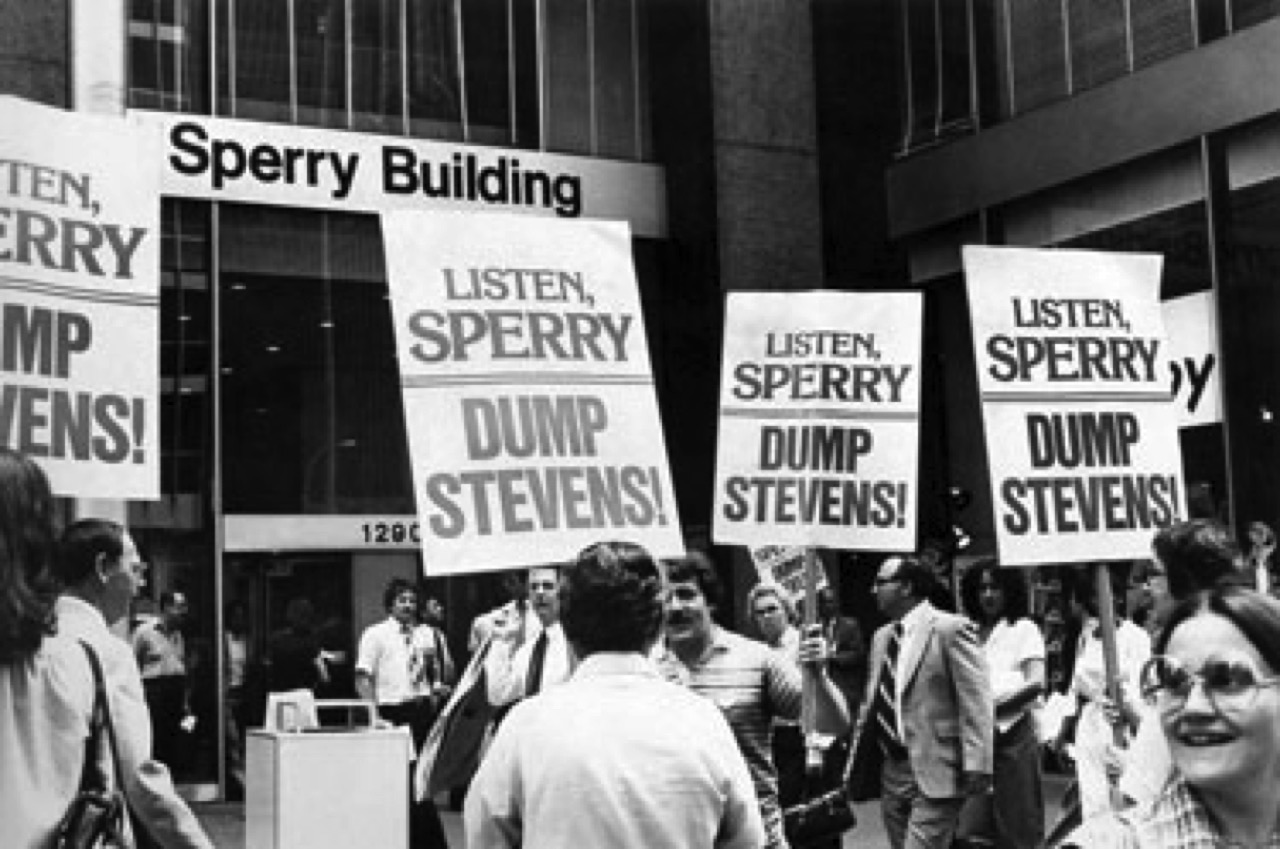
Sutton traveled as one of the campaign’s most effective public voices. Yet historians of the struggle have emphasized that Roanoke Rapids was never the work of one woman alone.
Black and white workers organized inside the plants; women workers became particularly visible spokespeople; religious and civil-rights organizations helped move what had begun as a mill-town labor dispute into national public life.
In 1980—six years after the representation election—Stevens and ACTWU finally reached a settlement.
The agreement included binding arbitration of grievances, automatic union-dues checkoff and compensation for wage increases workers had lost during the prolonged contract fight; contemporary accounts put retroactive wage payments at roughly $3 million.
That was the institutional victory.
Sutton’s table had not created it by itself.
What the table had done was expose the fear that had made such a victory seem impossible.
Hollywood Took the Moment—and Changed the Woman
By then, Sutton’s story had already begun moving beyond labor circles.
Journalist Henry P. Leifermann profiled her in The New York Times Magazine in 1973 and expanded the story into the 1975 book Crystal Lee: A Woman of Inheritance.
Hollywood noticed.
Producers Tamara Asseyev and Alex Rose developed the project, Martin Ritt agreed to direct, and screenwriters Irving Ravetch and Harriet Frank Jr. transformed Sutton’s experience into a fictionalized story.
Crystal Lee Sutton became Norma Rae Webster.
Eli Zivkovich became Reuben Warshowsky.
Roanoke Rapids became a fictional Southern mill town.
Other details were altered or invented, partly because Sutton and the filmmakers could not reach agreement over rights and control of her portrayal.
The American Film Institute’s production history records that the movie proceeded as a fictionalized treatment with names and details changed.
But one thing proved too powerful to replace.
The table.
Sally Field recreated Sutton’s gesture: the cardboard sign, the slow turn, the workers shutting down their machines.
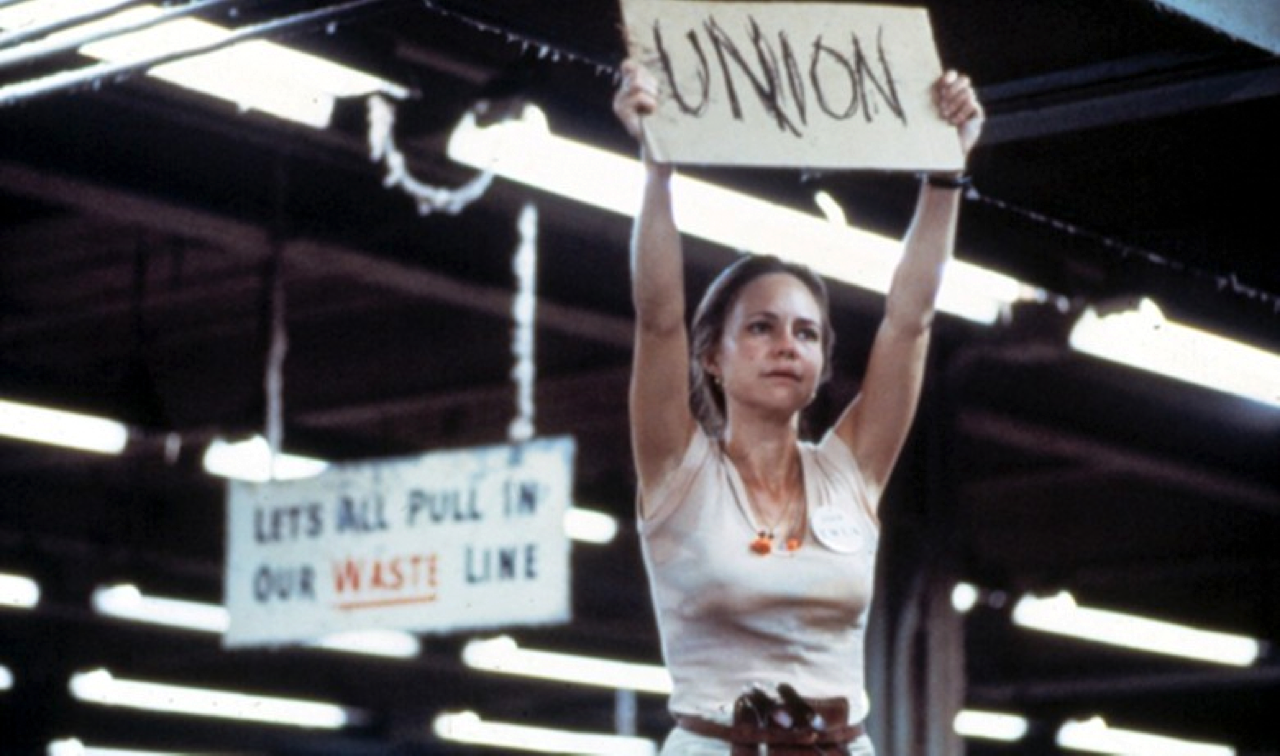
Norma Rae opened in 1979. Field won Best Actress at Cannes and then the Academy Award for Best Actress.
Sutton initially received none of that success. After years of dispute, her attorneys eventually negotiated a settlement with 20th Century Fox.
Sutton Wanted Workers to Remember There Were Many “Norma Raes”
Her objections to the movie went deeper than money.
Sutton believed Hollywood had made the story too much about one unusually rebellious woman.
That made for effective drama, but it compressed years of organizing and reduced the contributions of people who had lost jobs, endured intimidation, built interracial coalitions, organized churches, maintained boycott campaigns, and stayed in the mills long after Sutton herself had gone.
That distinction mattered to her.
Her experience had made her famous, but collective action was the point.
Sutton went to work as a union organizer and became known nationally as “the real Norma Rae.” During a major 1980 campaign tour, she traveled through 19 cities promoting the Stevens boycott and discussing working conditions.
The film that had frustrated her also gave her a larger microphone.
Unions booked theaters for screenings. Audiences who might never have followed an NLRB dispute watched a woman stand on a table and force an entire workplace to confront the meaning of solidarity.
At a March 1980 labor benefit, Sutton finally met Sally Field.
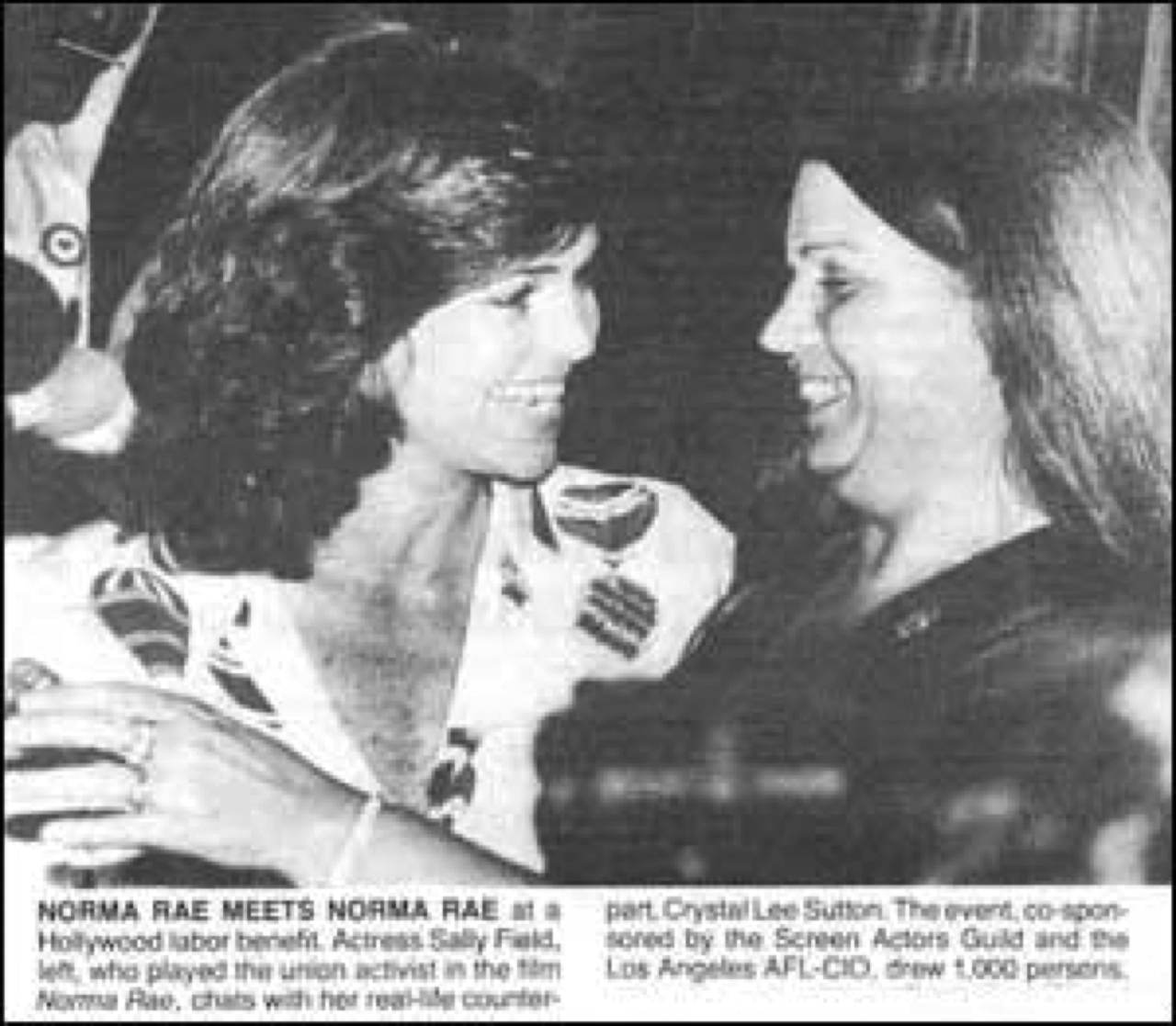
The actress had won acclaim by embodying a fictional version of the mill worker. Sutton was still doing the less glamorous work of organizing.
The Contract Arrived Seven Years After Sutton Climbed Onto the Table
The chronology is what makes the real story more complicated—and more interesting—than the movie.
Sutton was fired in 1973.
The workers won representation in 1974.
Norma Rae reached theaters in 1979.
The first contract did not arrive until 1980.
Seven years separated the handwritten sign from the agreement workers had been fighting to obtain.
Sutton did not personally deliver every part of that victory. Thousands of workers, organizers and allies carried the campaign through the years when the spectacular moment was already over.
That is precisely why her action mattered.
It condensed an enormous conflict into something instantly understandable.
Management could discipline one employee.
It could fire one employee.
It could have one employee arrested.
But when workers who had spent their lives surrounded by the noise of machinery independently reached for their switches, the relationship of power inside the room changed.
For a few minutes, the company owned the factory.
The workers controlled whether it made a sound.
Long After the Movie, Crystal Lee Sutton Kept Using Her Own Name
In 1980, Sutton received the Pacem in Terris Peace and Freedom Award, becoming its 13th recipient.
She later studied at Alamance Community College and earned certification as a nursing assistant.
She also preserved the documentary record of her organizing life—correspondence, photographs, speeches, union material and other papers—by placing it with the college.
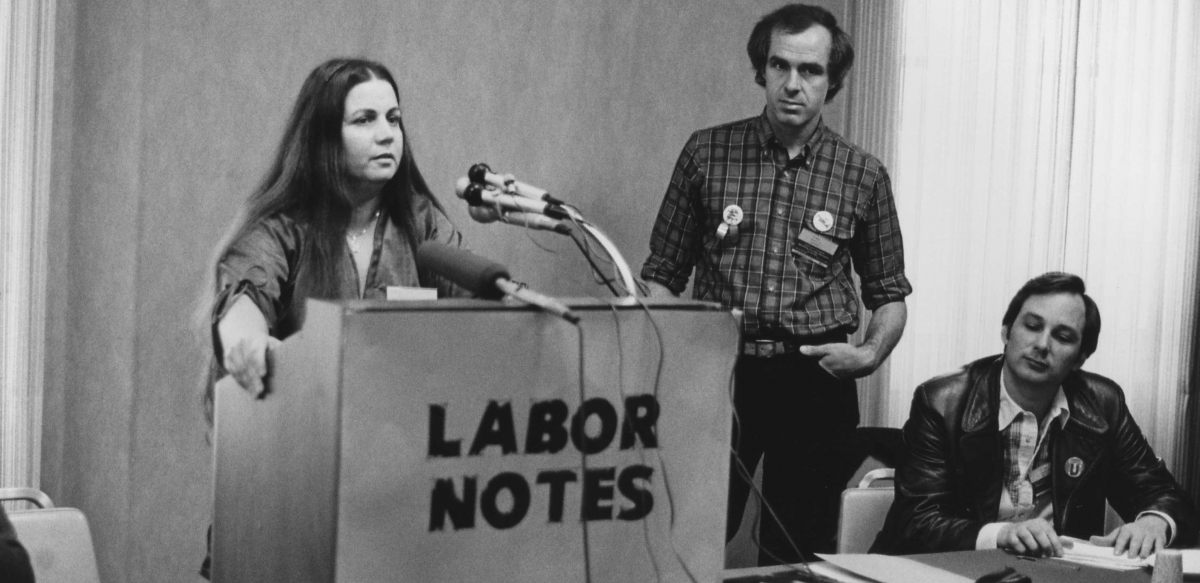
That archive matters because popular memory has a way of replacing real people with the actors who portray them.
The movie’s image became universal.
Sally Field standing beneath fluorescent factory lights.
Cardboard overhead.
UNION written across it.
Machines stopping.
But Crystal Lee Sutton’s papers lead back to the messier history behind the frame: racial division, labor law, low wages, corporate resistance, broken careers, organizers, consumer boycotts, courtroom fights and years of bargaining that continued after the dramatic scene was finished.
Sutton died of brain cancer in Burlington, North Carolina, on September 11, 2009. She was 68.
By then, generations of viewers knew what Norma Rae had done.
The more difficult historical question was whether they knew who had done it first.
The Oscar belonged to Sally Field. The silence inside that Roanoke Rapids mill belonged to Crystal Lee Sutton—and to the workers who saw her sign, reached for their switches, and decided that one woman’s defiance would not remain hers alone.